Wayfinding at Events: Exhibition Printing With Coloured Foamex
Anyone who has wandered a large conference centre looking for Seminar Room B knows how quickly a good event can turn frustrating. Visitors arrive with limited time, a lanyard, a coffee and a list of people they want to meet. If they cannot find the right hall, stand or talk within a few minutes, they give up or miss it entirely. Clear directional signage is one of the least glamorous parts of event planning, yet it shapes how attendees remember the day. Planned well, it guides people effortlessly from the entrance to every session and exhibitor.
Think Like a First-Time Visitor
The best way to plan event signage is to walk the venue as if you have never been there before. Start at the car park or train station and follow the route a visitor would take.
Questions to ask on the walk
- Where would I hesitate or feel unsure which way to go?
- Which doors, lifts and staircases are confusing?
- Where are the toilets, cloakroom, catering and first aid?
- How would someone in a wheelchair or with a pushchair get around?
- Where might queues form, and how can signs keep them moving?
Every point of hesitation is a place that needs a sign.
Colour as a Navigation Tool
People process colour faster than words. Assigning a distinct colour to each zone of an event helps visitors orientate themselves almost instantly.
For example, a trade show might use blue for the main exhibition hall, green for seminar theatres, orange for catering and networking, and purple for VIP areas. Every sign relating to each zone carries that colour, from the entrance map to the final arrow outside the door.
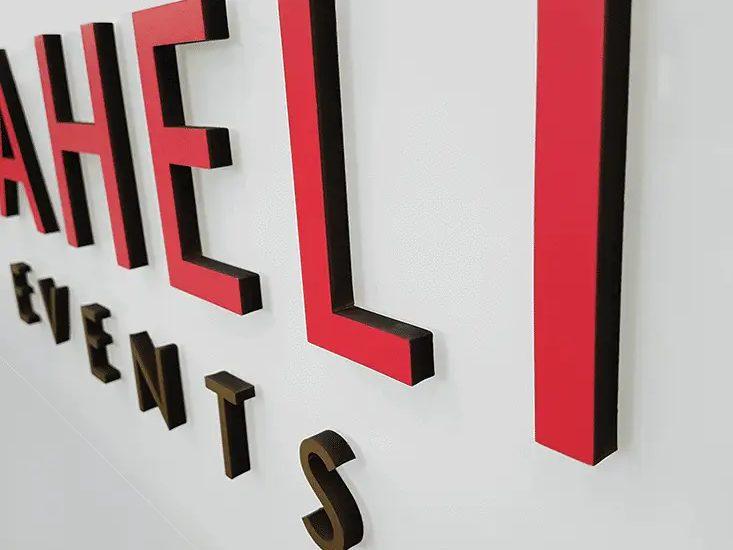
This is where coloured foamex comes into its own. Because the pigment runs through the whole sheet, cut edges match the face, so arrows, shapes and zone markers look clean and consistent from every angle.
The Sign Types You Will Need
Welcome and orientation boards
Placed at entrances, these show a simple map, the event name and the main zones. Keep them uncluttered, with a clear "you are here" marker.
Directional signs
Arrows with destination names guide people along corridors and through junctions. Place them where decisions are made, not after the point where someone has already turned the wrong way.
Zone markers
Large, colourful panels at the entrance to each area confirm that visitors have arrived in the right place.
Room and session signs
Signs outside seminar rooms should show the room name and, ideally, a slot for changing session details. Interchangeable sign inserts make updating schedules easy during the day.
Hanging signs
In large halls, suspended signs above aisles can be seen over the heads of crowds. Check the venue's rules on rigging before planning these.
Design Principles That Help
Effective wayfinding follows a few simple rules:
- Use large, high-contrast lettering readable from a distance.
- Stick to one clear sans-serif typeface throughout.
- Use arrows consistently, always pointing in the direction of travel.
- Keep messages short: one destination per arrow where possible.
- Include universally understood symbols for toilets, lifts and exits.
Accessibility matters too. Avoid colour combinations that are difficult for people with colour vision deficiency to distinguish, such as red text on green. Pair colour with words and symbols so no one relies on colour alone.
Placing Signs at the Right Height
Signs mounted at roughly eye level work well in quieter corridors, while signs in busy halls should be raised above head height so they can be seen over crowds. Free-standing signs should be stable and positioned so they do not obstruct walkways or fire exits.
Combining Colour With Print
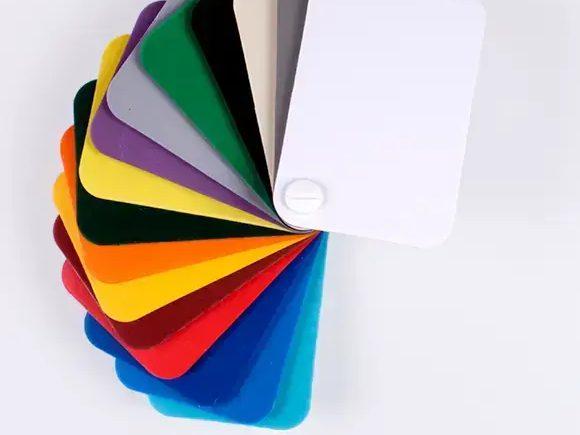
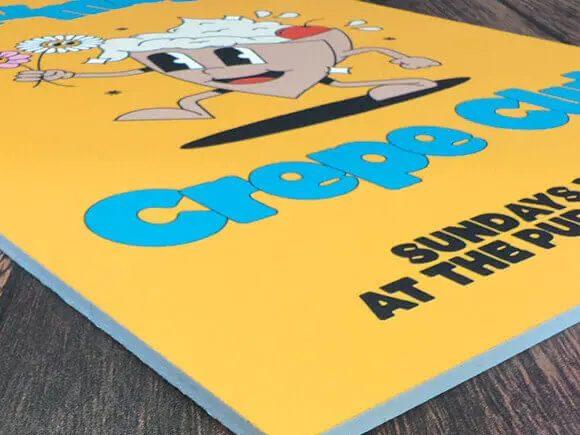
Sheets in solid colours can be used on their own, with cut vinyl lettering applied on top, or they can be printed directly. Good exhibition Printing on coloured sheets uses a white ink base layer beneath the design so that printed colours stay true rather than mixing with the board colour underneath.
Building a Reusable System
Annual events and touring roadshows benefit from signage that can be reused. Designing a modular system helps:
- Keep permanent zone colours and symbols on the main panels.
- Use removable overlays for dates and session names.
- Number each sign and keep a placement map for set-up.
- Store panels flat in protective sleeves between events.
- Use free-standing sign stands that pack down easily.
A Simple Planning Timeline
Six to eight weeks before the event, confirm the venue layout and walk the route. Four to six weeks before, finalise the zone colours, sign list and wording. Three weeks before, approve proofs. One to two weeks before, receive and check every sign. On set-up day, place signs according to your map and walk the route again to spot gaps.
Allowing time for corrections means last-minute changes do not become last-minute panic. Ordering a few spare blank panels lets you handle unexpected changes on the day.
Our article Coloured Foamex for Exhibition Printing: Design and Uses offers further ideas on how coloured sheets can be used across stands and events.
Getting People Where They Need to Go
Good wayfinding is invisible when it works. Visitors simply arrive where they intended, relaxed and on time, without ever thinking about the signs that guided them. A clear colour system, well-placed directional panels, readable lettering and modular design make that possible, whether you are running a one-day conference, a regional roadshow or a busy three-day trade show in a major exhibition centre. If you are planning signage for your next event, the team at Foamex Board can help you choose colours, sizes and formats that work for your venue.

Comments
Post a Comment